

Fatih Beyaz
Download PDF
Jul 8 2025
1
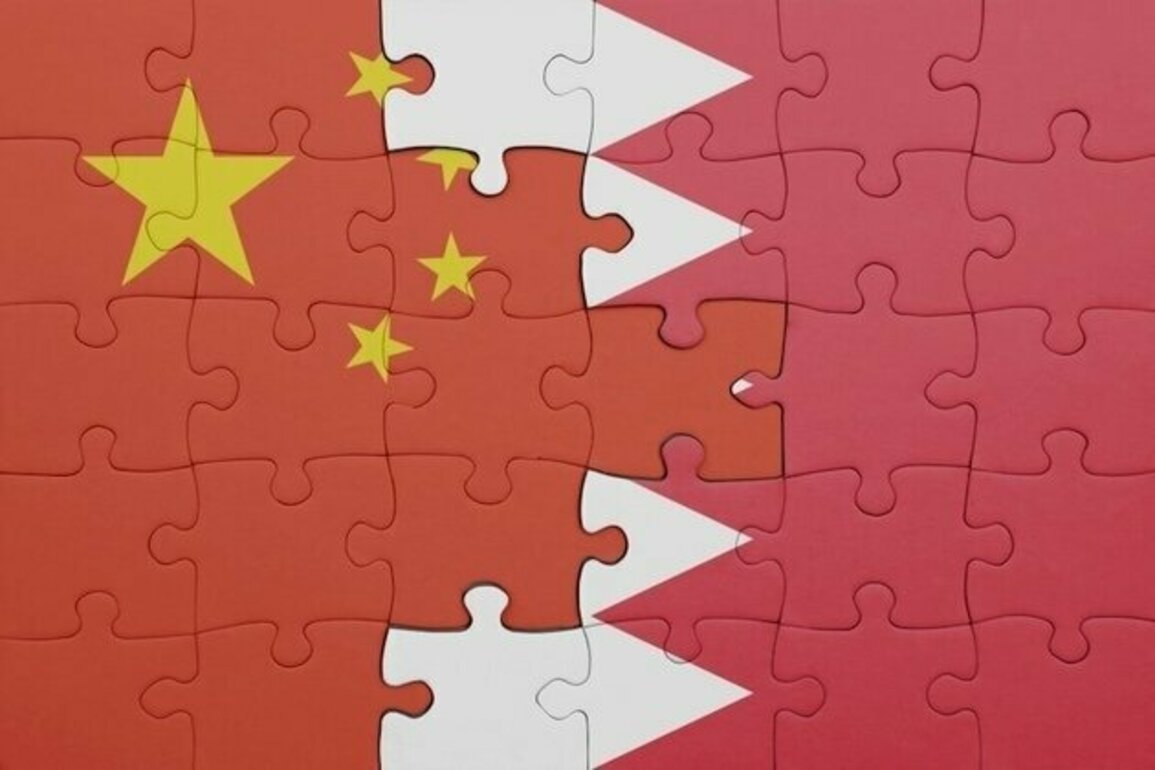
viewsRuletkka/DepositphotosAnalyzing Chinas understanding of global hegemony requires understanding not only its current foreign policy practices but also its thousands of years of historical memory and the notion of civilization. China has historically been called the Middle Kingdom (Zhnggu), and this designation has carried with it not only a geopolitical claim but also a claim of cultural superiority. This claim was embodied in the traditional tributary system that positioned the states around China in a hierarchical order, and it penetrated a wide geography during the Ming and Qing dynasties. Todays interpretations of Chinas rise are often evaluated only in the context of the post-Cold War power vacuum, ignoring this historical continuity. However, Chinas quest for hegemony is not only a modern power policy, but also a civilization-centered reconstruction project rooted in Confucian political philosophy.
In his work The Rise and Fall of the Great Powers, Paul Kennedy argues that economic power is decisive in the sustainability of military and political power. According to Kennedys analysis, the collapse of great powers is often linked to imperial overstretch. It is observed that China has established a strategic balance in this context. It is trying to continue economic development not through military expansion but through infrastructure diplomacy, debt policies and soft power strategies. The Belt and Road Initiative (BRI) is the most visible manifestation of this strategy. China aims to connect not only Asia but also a wide geography from Africa to Europe with economic networks. As Kennedy emphasizes in his thesis, hegemony is established not only through military superiority but also through control of production power and logistics networks. Chinas railway and port investments constitute the infrastructure of this long-term plan.
Henry Kissinger argues in his work World Order that China has historically aimed to establish its own order by influencing its surroundings rather than through conflict. According to Kissinger, it is possible to say that China acts with the logic of weiqi (); this game, unlike the chess of the West, is based on siege and long-term position gains. Just like in weiqi, China aims to gain advantage by gradually expanding its area and reducing the opponents capacity to move rather than directly confronting each other. This strategy is clearly observed in the militarization of the islands in the South China Sea, the pressure policies on Taiwan, and the economic relations it has established with ASEAN countries.
Chinas vision of global hegemony has been clearly expressed not only through strategic moves, but also through official documents and policy texts. The 19th Party Congress Report published in 2017 set forth Chinas goal of becoming a modern socialist strong country by 2049. This goal forms the ideological basis for the transition from the revolutionary isolationism of the Mao era to the active global engagement of the Xi Jinping era. The concept of Chinese-style modernization, frequently cited in this document, claims to offer an alternative development model to the liberal norms of the West. China aims to establish a new hegemonic pattern not only for itself but also for developing countries.
Another distinguishing feature of this hegemonic model is that it creates economic dependency rather than military expansion. Port projects in Africa, energy lines in Asia, and technology investments in Europe are all tools for China to spread its global power. The Chinas Asia-Pacific Security Strategy report published in 2015 reveals Chinas will to shape regional security independently of Western alliances. Similarly, in the White Paper published in 2020, China challenges the Western-centric structure of institutions such as the United Nations, the World Trade Organization, and the IMF by calling for global governance reform. These initiatives can be considered a contemporary version of the institutional restructuring that Kennedy saw as critical in the process of establishing hegemony.
Historically, China has constructed its relations with the outside world within a Sino-centric framework. The naval expeditions conducted under the command of Zheng He during the Ming Dynasty aimed to reestablish the tribute system and political hierarchy rather than to showcase Chinas naval power. This missionary approach is a more indirect and ideologically based form of hegemony compared to the colonial expansionism of the West. Modern China continues the same approach by updating it. For example, Confucius Institutes in Africa are not only language teaching institutions but also tools for spreading Chinese cultural values. In this context, the concept of civilization state emphasized by Kissinger includes the claim that China is not only a nation-state but also a civilization formation with a multi-layered historical continuity. Through this claim, China is trying to gain moral and cultural superiority over the West in the race for hegemony.
Chinas hegemonic claim is not limited to economic and cultural tools. The technological field is a solidified form of Chinas soft power strategy. Companies such as Huawei, ZTE and BYD are not only private sector actors, but also extensions reflecting the states strategic interests. The Digital Silk Road project means not only infrastructure investment, but also the shaping of digital surveillance, data management and artificial intelligence standards in a China-centered manner. Such technological initiatives show that China has successfully achieved the ability to adapt to new production techniques that Kennedys analysis emphasizes. Historically, just like Britains steam engines and the USs dominance in information technologies, China also claims to lead the technological revolution of the 21st century.
In terms of international law, Chinas hegemony strategy constitutes an alternative to the Wests emphasis on a rules-based international system. The fact that the Permanent Court of International Arbitration (PCA) did not recognize the decision against China in 2016 in the South China Sea shows that China is not engaged in this system and is trying to establish its own legal norms. Similarly, China, which stands out in alternative security structures such as the Shanghai Cooperation Organization, assumes the leadership of non-Western alliances. This is an indication that hegemonic powers, as analyzed by Kennedy, are not only integrated into the existing order, but also establish their own order.
All these developments bring up the debate of whether China should be considered a revisionist power or a status quo preserving actor. Kissinger goes beyond this duality and states that China has a search for a peaceful order in its historical memory. However, the current reality shows that China has developed a hybrid hegemony model in which it both protects and occasionally challenges the status quo. For example, China is both committed to the current order as a permanent member of the United Nations Security Council and is trying to build new structures outside of this order by establishing alternative trade blocs. As in Kennedys historical analysis, powers often want to benefit from the benefits of the current order while at the same time redefining this order according to their own interests. China also continues this dual strategy with great skill.
As a result, Chinas understanding of global hegemony presents a structure where historical continuity and modern strategic calculations merge. At the intersection of Kennedys analyses based on economic determinism and Kissingers historical diplomacy and geopolitical predictions, Chinas rise can be evaluated as both an opportunity and a challenge. China aims to be a central power in the future, as it has in the past, and it is trying to achieve this not through military expansionism but through economic, technological and cultural influence. Although historical experience shows that such powers eventually reach a balance, it is inevitable that China will radically transform world politics in this process.
In order to understand Chinas contemporary hegemony strategy, developing a comparative perspective with empires that have made similar claims in history will shed light on todays geopolitical dynamics.
The Roman Empire first focused on military conquests in the process of establishing hegemony, and then exported Roman law, language, and urbanization models to the occupied territories, thus turning to a kind of civilizational expansion. This period, called the Pax Romana, provided stability in the Mediterranean basin for about two centuries, but Romes difficulties in maintaining its expanding borders and its internal economic problems accelerated the process of its collapse. Unlike Rome, Chinas current strategy avoids direct military expansion; on the contrary, it tries to realize a similar ideal of ruling in peace through economic investments, digital infrastructure, and cultural influence. The Pax Sinica model that China is trying to build, unlike Rome, follows a strategy of pacifying the periphery through mutual economic dependency rather than central military control.
Another important example is the British Empire. In the 18th and 19th centuries, control of global trade routes and overseas colonies cemented Britains hegemonic position. Britain monopolized trade through quasi-state institutions such as the East India Company, then consolidated this economic power through colonial rule. Chinas current Belt and Road Initiative (BRI) resembles Britains strategy for trade routes in some ways: to establish itself at the center of global trade through ports, railways, and land transportation. But there is a distinct difference here: while Britain embraced direct political control and colonial rule, China more often created economic dependency on host countries and exerted political influence indirectly. This has led to todays discussions of neo-imperialism.
The hegemonic rise of the USA in the 20th century largely occurred simultaneously with the establishment of international institutions after World War II; the normative framework of the global order was shaped around Western values through structures such as the IMF, the World Bank and the United Nations. The USAs hegemony was reinforced not only by military superiority but also by the global norm of liberal values. China seriously questions this approach and offers an alternative set of values. The discourse of Chinese-style modernization highlights a collectivist approach that prioritizes development under the guidance of the state, as opposed to the individual-centered liberal model of the West. In this respect, China is trying to redefine not only material power but also a hegemonic value system.
Historical examples show us that hegemony is not only built with military or economic power, but also with values, institutions and worldview. Like the Roman citizenship of the Roman Empire, the civilization mission of Britain and the discourse of freedom of the USA, China has also turned to this hegemonic construction with the rhetoric of the civilization state and mutual gain. However, as history shows, the permanence of hegemonic powers is not only related to their success during the rise, but also to the flexibility and inclusiveness they establish in times of crisis. When Rome failed to respond adequately to barbarian invasions, Britain failed to adapt to non-industrial regions and the USA failed to respond sufficiently to global insecurity, it entered a period of decline. Although Chinas current model draws attention with its flexible, long-term and conflict-avoiding strategy, it faces problems such as debt trap criticism, technology security discussions and regional resistance. In this context, Chinas hegemony experience has a hybrid structure that contains both similarities and originalities from historical examples.
As we move towards the middle of the 21st century, Chinas quest for global hegemony is no longer limited to the legacy of the past or the strategic preferences of today; it is also becoming an influential actor on the grounds where the future will be shaped. From a futuristic perspective, Chinas vision of global order is based on a new civilization model that departs from the Western construct of modernity. This model transcends traditional definitions of military-political power and proposes an alternative global order through areas such as artificial intelligence, quantum computing, genetic engineering and space technologies.
The year 2049 is a symbolic date in Chinas strategic documents. This date is both the 100th anniversary of the founding of the Peoples Republic of China and the threshold of the completion of the goal of becoming a modern socialist strong country. However, this goal includes not only domestic development but also the reshaping of global norms. Chinas vision of future hegemony will not be an imperial expansion in the classical sense, but a multi-dimensional civilization-building project. Within this framework, China aims to be a systemic center rather than a military superiority: transforming the international financial system through the digitalization of its currency, redefining cyber sovereignty by exporting the digital authoritarian model, and influencing governance systems with artificial intelligence-based governance practices.
Systems developed in the field of artificial intelligence and big data in particular will be key to Chinas future hegemonic capacity. Internal security practices such as the social credit system are not only authoritarian control tools; they are also the pioneer of an alternative governance paradigm. Exporting simplified versions of this system abroad (for example, providing security technologies to some African or Central Asian states) demonstrates Chinas potential to expand the concept of data-based sovereignty globally in the future. Just as the United States established hegemony by exporting liberal democracy, China could export authoritarian pragmatism by legitimizing it with economic development.
Space technologies are also an integral part of Chinas long-term hegemonic vision. Chinas Change missions to the Moon in the 2020s, Mars rovers, and the independent Tiangong space station in orbit aim to break the Wests monopoly in space. Chinas plan to establish a permanent base on the Moon in the post-2030 period should be evaluated not only as scientific progress but also as a highly symbolic hegemonic step. Chinas capabilities in areas such as space mining, independent space communication infrastructures, and global navigation systems have the potential to place China at the center of the new order that will emerge when the Wests technical monopoly on global governance is shaken.
China is developing new norms based on harmony, stability, and collective development in opposition to Western norms of individualism, freedom of expression, and unlimited competition. These norms are more easily accepted, especially in developing authoritarian or semi-democratic countries, and have earned China a position as a model country. In Chinas vision of the future, hegemony will be achieved not only through military bases and alliances, but also through control of norms and algorithms. This is a paradigm shift that fundamentally transforms traditional definitions of power. The internal economic problems that China may face, demographic contraction, middle-income trap, environmental crises, and social pressures that may arise from digital authoritarianism will be the fragile points of this hegemonic construction.
References
China State Council Information Office. (2015). Chinas military strategy.
China State Council Information Office. (2020). China and the world in the new era.
Communist Party of China. (2017). Report of the 19th National Congress of the Communist Party of China.
Friedberg, A. L. (2011). A contest for supremacy: China, America, and the struggle for mastery in Asia. W. W. Norton & Company.
Kennedy, P. (2022). The rise and fall of the great powers: Economic change and military conflict from 1500 to 2000. Efinito.
Kissinger, H. (2011). On China. Penguin Press.
Kissinger, H. (2014). World order: Reflections on the character of nations and the course of history. Penguin Press.
Pillsbury, M. (2016). The hundred-year marathon: Chinas secret strategy to replace America as the global superpower. St. Martins Griffin Press.
Rudd, K. (2022). The avoidable war: The dangers of a catastrophic conflict between the US and Xi Jinpings China. PublicAffairs.
Scobell, A., Ratner, E., & Beckley, M. (2014). Chinas strategy toward South and Central Asia: An empty fortress. RAND Corporation.
Further Reading on E-International Relations
- The Global South in Times of Crisis: A ChinaAfrica Relations View
- Threat Perception, Competition and the Quest for Hegemony in China-India Relations
- Opinion The Civilisation Narrative: Chinas Grand Strategy to Rule the World
- Opinion Chinas Global Security Initiatives Revisionism
- Opinion Trumps Effective China Strategy
- The Implications of Chinas Growing Military Strength on the Global Maritime Security Order
About The Author(s)
Fatih Beyazis a Ph.D. candidate in International Relations at Sakarya University, with a masters degree in Political History from Kocaeli University. His academic work focuses on Chinese foreign policy, East Asian strategic dynamics, and international political economy. He is affiliated with various research institutions, including the Turkish Historical Society as a Far East Studies Specialist.
TagsChina