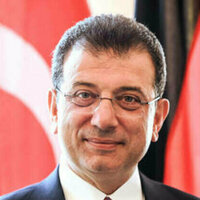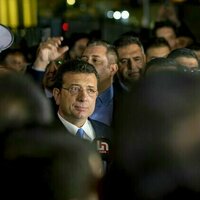


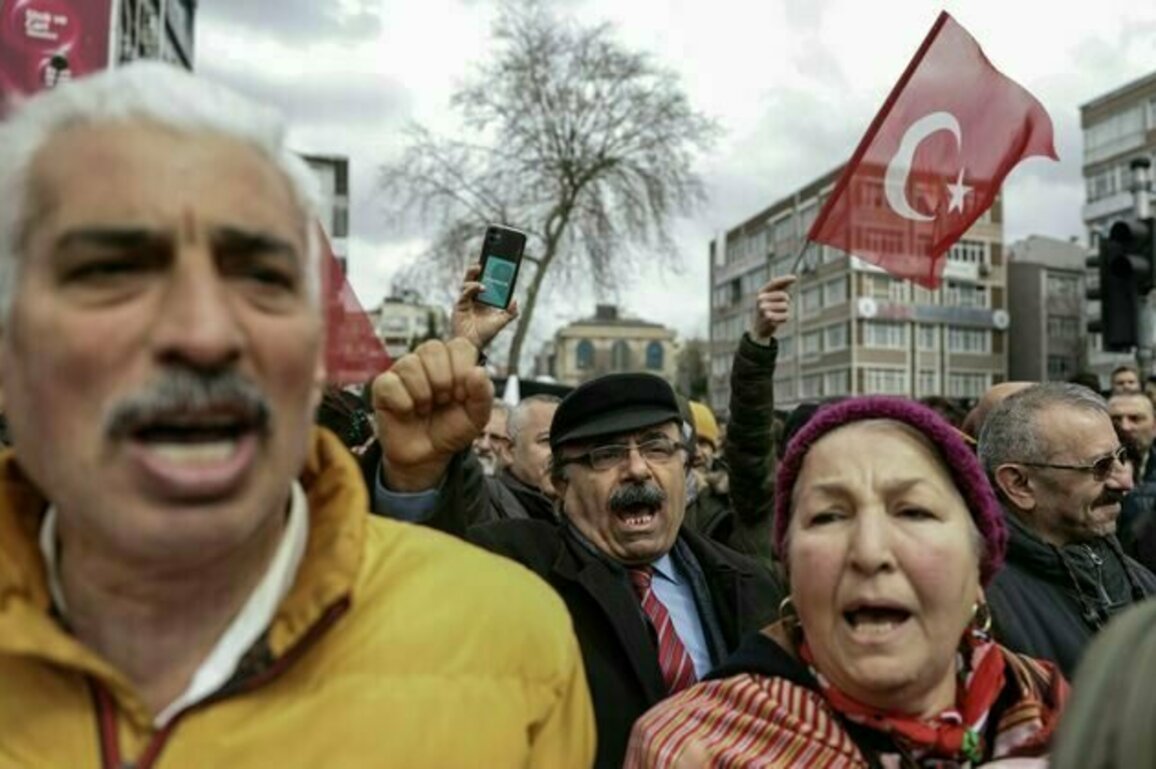
The Turkish judiciary has finally succeeded in sidelining Istanbul's mayor, Ekrem mamolu, at the fourth attempt. On the morning of March 19, the 53-year-old posted a video on social media announcing that police had arrived at his home to arrest him on charges of corruption, aiding a terrorist organisation and organised crime.
"Hundreds of police are at my door", he said in a voice message. "This immoral and tyrannical approach will undoubtedly be overturned by the will and resilience of our people".
Turkey's president, Recep Tayyip Erdoan, has consistently excelled at positioning himself on the international stage, adeptly seizing opportunities left by others and turning them to his advantage. He has demonstrated this once again by orchestrating the arrest of mamolu, his main political rival.
With global events bolstering his leverage over the west, Erdoan is well placed to act with impunity, knowing that his strategic importance will likely shield him from serious repercussions.
The judiciary's first attempt to remove mamolu through legal means came in 2019, shortly after he won the Istanbul mayoral election by a narrow margin (around 13,000 votes). Erdoan's ruling Justice and Development party (AKP) contested the results, citing irregularities.
Under intense pressure from the government, the Supreme Electoral Council annulled the vote and ordered a rerun. mamolu not only retained, but significantly increased his lead. He secured victory over the AKP's candidate, Binali Yldrm, by more than 800,000 votes.
Then, in 2022, mamolu was sentenced to two years in prison for having called two public officials "fools" three years earlier. Ultimately, he was not arrested. But the sentence severely undermined his presidential ambitions, prompting him to forgo running for the presidency the following year.
The third attempt occurred just days ago, when the government revoked the validity of mamolu's academic degree on bureaucratic grounds. Turkey's political future looks to be entering a new and more precarious phase.
mamolu was born in Akcaabat, a district of Trabzon province on north-east Turkey's Black Sea coast. He graduated in economics at Istanbul University and worked as a construction entrepreneur before entering politics.
He is married with three children and, like Erdoan, is passionate about football. In his youth, he was both a footballer and the managing director of his hometown's football club, Trabzonspor.
In 2024, mamolu was reelected as mayor of Istanbul. Over the past six years, he has become a highly prominent political figure and, given the city's size and his broad popularity, he has often been regarded as a natural candidate for the Turkish presidency.
Many expected him to run as the opposition Republican People's Party (CHP) candidate in the 2023 presidential election. But the party chose its leader, Kemal Klcdarolu, instead.
This decision was partly driven by internal power struggles between the party's old guard and newer leadership. However, the insult lawsuit against mamolu alarmed many within the CHP, who feared that a potential arrest during the campaign would plunge the contest into chaos.
Klcdarolu is less popular than mamolu, and is from an older generation of opposition politicians who have repeatedly failed to challenge Erdoan effectively. He ultimately lost to Erdoan in the second round of voting.
Despite state-led media campaigns to discredit mamolu, his popularity has continued to rise. As a leading CHP figure, he was the frontrunner in the party's primaries scheduled for March 23, ahead of the 2028 presidential elections. The arrest of mamolu is widely seen as Erdoan's latest attempt to obstruct his candidacy.
Along with mamolu, Turkish authorities have detained 87 people as part of an investigation into alleged terrorism and organised crime in Istanbul.
Prosecutors accuse mamolu of leading a criminal organisation, engaging in bribery, extortion and bid rigging. The inquiry also links him to financial misconduct and alleged ties with the Kurdistan Workers' party (PKK), which the Turkish state categorises as a terrorist organisation.
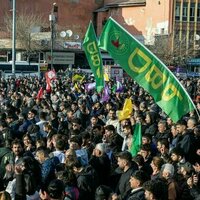
This is not the first time prominent political leaders in Turkey have been arrested on such charges. mamolu's case closely mirrors that of Selahattin Demirta, a Kurdish politician and former co-chair of the pro-Kurdish Peoples' Democratic party (HDP), who has been imprisoned since November 2016.
Demirta, who was arrested during Erdoan's crackdown on political opposition after an attempted coup in 2016, was charged with "terrorist propaganda" and "undermining state unity". In elections the previous year, his presidential campaign had gained widespread support, allowing the HDP to surpass Turkey's 10% electoral threshold for entering parliament for the first time.
Despite international calls for his release, including rulings from the European Court of Human Rights, Demirta remains incarcerated. In 2024, he was sentenced to a total of 42 years. Much like mamolu today, his continued detention is widely regarded as politically motivated.
In their influential work, How Democracies Die, Harvard professors Steven Levitsky and Daniel Ziblatt argue that the willingness to curtail civil liberties, such as controlling the media and suppressing dissent, is typical of populist leaders determined to tighten their grip on power.
This latest crackdown is yet another episode in the continued erosion of democratic space in Turkey. However, Erdoan currently operates in an unusually favourable global climate, with multiple strategic negotiations placing him centre stage.
Although he has not hesitated to sideline rivals in the past, this environment has shifted further in his favour. The US president, Donald Trump, has rarely opposed such actions or condemned the suppression of political rights in other countries. On several occasions, Trump has even demonstrated his willingness to subject the US justice system and his opponents to his own will.
The EU, distracted by internal conflicts and the Russian threat, also appears keen to keep Turkey onside. Turkey has Nato's second-largest army and a Black Sea coastline, and is seeking to assume a key role in Europe's security following Washington's pivot away from the region. Across the Middle East, democracy often serves more as a bargaining chip than a genuine priority.
Erdoan has recently launched a "new Kurdish process", aimed at reconciling with the PKK. This makes mamolu's arrest all the more surprising. The move may be intended to distance Kurdish voters from the CHP.
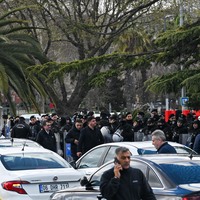
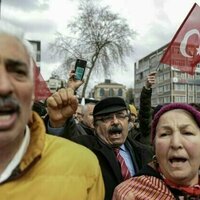
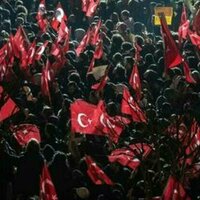
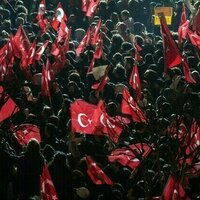
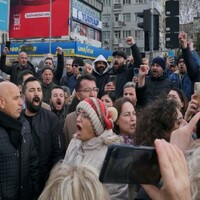
Some citizens have attempted to protest the arrest despite a government ban on public gatherings. It remains to be seen how resilient the Turkish people will prove. Ultimately, Erdoan's success depends on the opposition's ability to unite against him.