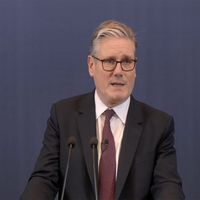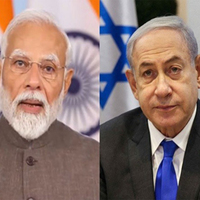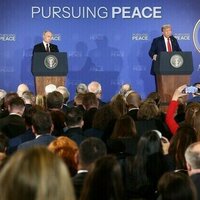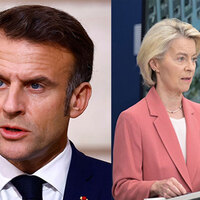



The United States' closest European and Arab partners have met in Paris to work on how to shape Gaza'spost-war future, hours after Israel and Hamas agreed to aceasefireand prisoner-hostage swap proposed by US PresidentDonald Trump.
Israel's government ratified a ceasefire with the Palestinian militant group Hamas early Friday, a dayafter mediators announced an agreement to free 20 living Israeli hostages in exchange for Palestinian prisoners.
It is part of the first phase of US PresidentDonald Trump's initiative to end the two-year war in Gaza.
Major questions remain, including over governance and reconstruction of a largely destroyed territory, as well as whether Hamas will disarm a key Israeli demand that the militants have not yet publicly accepted.
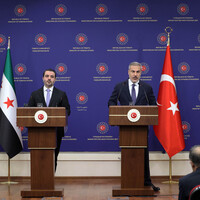
Thursday's meeting inParis, which brought together key European and Arab foreign ministers, was seen as an opportunity to add details on some of those core issues.
"We discussed the major fields to which we intend to contribute security, governance, reconstruction and humanitarian aid," French Foreign MinisterJean-Noel Barrottold reporters after the meeting.
Without going into details, he said countries had identified contributions and other elements that they were willing to take on in post-conflictGaza.
"We will share them with the United States so that they can integrate them," Barrot said.
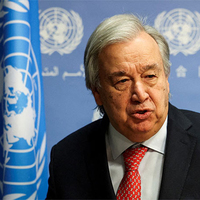
The United Nations said Thursday it had a detailed 60-day plan to rush aid into Gaza once a ceasefire was declared to start helping Palestinians in the war-ravaged territory.
UN unveils 60-day aid plan for Gaza once ceasefire starts
'Best chance we have'
The UN General Assembly last month endorsed a declaration outlining steps towards a two-state solution, while also condemningHamasand urging it to surrender and disarm. Parts of that have been included in the Trump plan, but European and Arab officials have warned there are gaps.
Officials said the aim was to work quickly side by side with Washington so that the opportunity of a ceasefire and a move to lasting peace was not lost.
"This is the best chance we have right now," EU foreign policy chief Kaja Kallas told reporters. "But we need to work for the plan after [the war], so that it would be sustainable."
Among those attending in Paris were Qatar's Prime Minister Sheikh Mohammed bin Abdulrahman al-Thani, who was one of the mediators of the ceasefire, as well as the Egyptian and Turkish foreign ministers, whose countries played a leading role in convincing Hamas to agree the deal.
All eyes on Hamas after Trump's Gaza plan wins Netanyahu backing
Mandate for international force
Trump's plan also calls for an international stabilisation force, and that was core to much of Thursday's discussions, including establishing aUnited Nationsmandate for a peacekeeping force, officials said.
The United States is sending about 200 troops to Israel to help support and monitor the ceasefire deal in Gaza, US officials said Thursday.
Diplomats said a number of countries had expressed interest in taking part, including Indonesia, which was represented on Thursday, but also Italy and Azerbaijan.
"I told all the ministers that we want to be major players beyond security also in reconstruction," Italian Foreign Minister Antonio Tajani told reporters.
German Chancellor Friedrich Merz said on Friday that Germany would provide 29 million euros in immediate humanitarian aid for Gaza.
Macron recognises Palestinian state at UN, defying Israel and United States
An earlier French proposal seen by Reuters outlined a phased plan for training and equipping 10,000 Palestinian Authority (PA) security forces. The PA was driven out of Gaza by Hamas but Trump's plan hints at a future role for it.
Under the proposals, a multinational stabilisation force requiring a UNSecurity Councilmandate and international financial support would be gradually deployed if a deal is reached. It would monitor a ceasefire, oversee Hamas' disarmament and support the transfer of security responsibilities to the PA.
(with newswires)
Originally published on RFI