

Mehmet Rakipolu
Download PDF
Jul 11 2025
1
viewsthenews2.com/DepositphotosAs affirmed byreportsfrom Amnesty International, UN Special Rapporteurs, and international legal experts, Israels conduct in Gaza satisfies multiple legal and empirical criteria of genocide: the deliberate targeting of civilians, intentional starvation, infrastructural annihilation, and long-term displacement of an ethnic-national group. The Convention on the Prevention and Punishment of the Crime of Genocide (1948)definesgenocide as acts committed with intent to destroy, in whole or in part, a national, ethnical, racial or religious group. Israels campaign in Gaza exemplifies this intent, not only through direct violence but also through strategies that target the conditions necessary for Palestinian life, memory, and futurity. Therefore, the multi-dimensional Israeli structure of violence expands the classical understanding of genocide and exposes how humanitarian infrastructure, digital technologies, and global capital are being mobilized as tools of destruction.
Perhaps the most visible and visceral component of Israels genocidal strategy has been the mass killing of civilians, particularlychildren. By June 2025, over 50,000 Palestinians had been killed in Gaza, with children constituting nearly half of all fatalities. The UNICEF and Save the Childrenreportshave labeled Gaza the most dangerous place on earth for a child, describing the scale of injuries, trauma, and long-term psychological devastation as unprecedented.
Hospitalshave also become Israels targets. Israeli forces have besieged, bombed, and invaded major medical facilities like Al-Shifa, Al-Aqsa, and Nasser hospitals, killing medical personnel and destroying ICU units, neonatal wards, and morgues. These attacks were not accidental; they were deliberate acts of collective punishment. The World Health Organizationreportedthat over 70% of Gazas health infrastructure had been rendered non-operational by the summer of 2024, effectively denying the population any chance of survival or recovery.
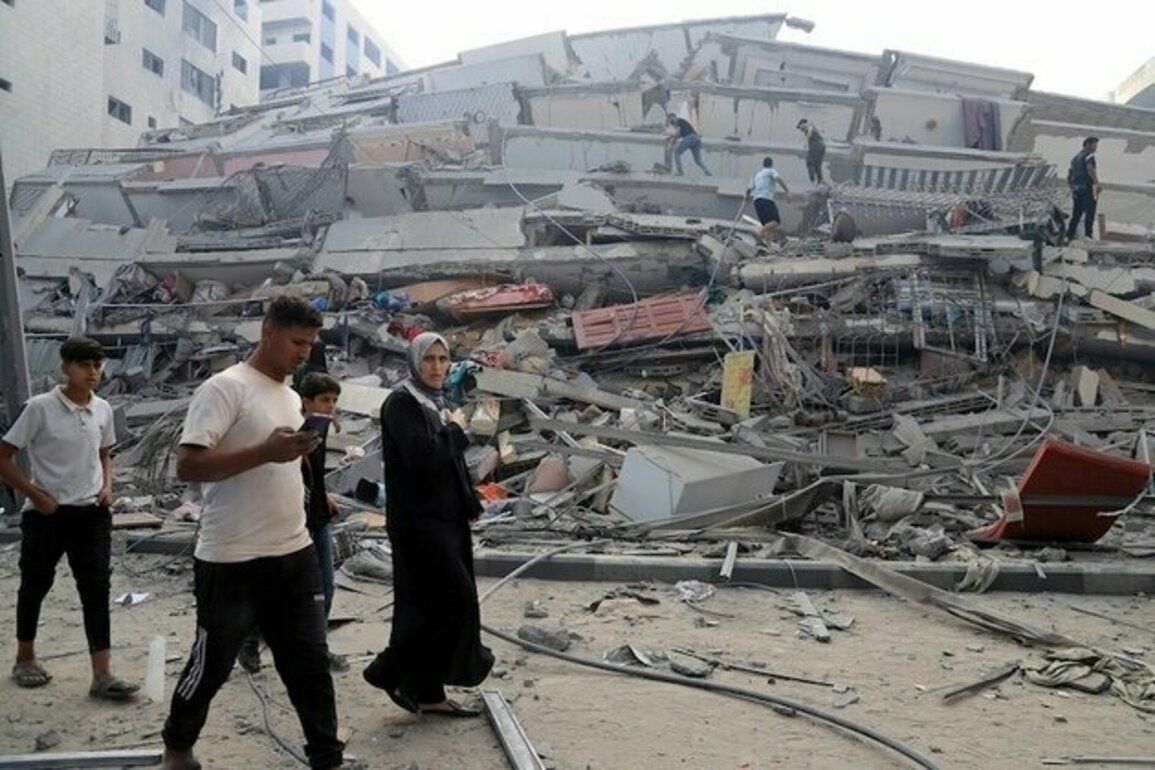
Alongside its attacks on human life, Israel has pursued an intentional strategy ofinfrastructuralgenocide. The scale of destruction in Gaza has reached catastrophic proportions. According to the UN Environment Programme (UNEP), more than39 million tons of debrisnow cover Gaza, resulting from the razing of homes, roads, mosques, schools, and power stations. This strategy ensures the collapse of civil life, sanitation, public health, and access to clean water or electricity. This is not merely wartime collateral damageit is a weaponized policy. The systematic obliteration of Gazas environment has rendered the territory unlivable. Farmlands have been chemically poisoned, aquifers contaminated, and sewage systems collapsed, creating the conditions for famine and disease. In essence, Israel is not just killing Palestiniansit is killing the land that sustains them.
A less visible, but equally destructive, tactic has been Israels systematic control and sabotage of Gazastelecommunications infrastructure. According to the digital rights group7amleh, over 50% of Gazas telecommunications systems were destroyed by Israeli bombardment, with the remainder barely functional due to fuel shortages, power outages, and Israeli interference. The consequences of these blackouts go beyond mere inconvenience. They have crippled humanitarian coordination, blocked emergency responses, and silenced Palestinians during massacres. Doctors have been unable to communicate across hospitals; families have lost contact with loved ones under rubble. This is what scholars now term cybernetic genocidethe use of information control to annihilate a populations ability to communicate, organize, or document its own destruction. This digital erasure serves an ideological purpose: it allows Israel to monopolize the narrative, conceal its atrocities, and suppress resistance. Palestinians are denied not only physical presence but also narrative agency, as their testimonies and suffering are algorithmically censored and technologically contained.
Another axis of genocide involves thecultural and symbolicannihilation of Palestinian identity. Israel has bombed media offices, libraries, mosques, churches, and heritage sites in Gaza, attacking not only the people but the historical memory of Palestine. The destruction of institutions like the Islamic University of Gaza and Al-Azhar University exemplifies this logic: education, knowledge, and history are treated as threats to Israeli domination. This cultural genocide seeks to erase any form of Palestinian futurity or intellectual continuity. By obliterating the archives of memory, the centers of scholarship, and the spaces of political thought, Israel endeavors to eliminate not just bodies but the idea of Palestinian peoplehood. This extends to the realm of global perception. Israeli bombardment has targetedjournalistsand media workers, while Israeli social media campaigns and government agencies wage psychological warfare to delegitimize Palestinian suffering. In this dual frontphysical and epistemicIsrael erases what is and what could be.
While destroying Gazas infrastructure and access to life, Israel has simultaneously orchestrated the illusion of humanitarian concern. The most infamous example was thefloating pier project, coordinated by theU.S., UAE, EU, and an obscure American logistics firm called Fogbow. As Sharri Plonski outlines, this temporary, 25-day pier project served more as propaganda than relief. It was built, celebrated, and dismantledall while Israel continued to restrict the entry of critical aid through land crossings. This contradictionobliterating life while choreographing carelies at the heart of what we may call humanitarian genocide. Aid becomes not a right, but a performance. The pier allowed the international community to claim moral legitimacy, while reinforcing Israels control over every grain of flour and box of medicine entering Gaza.
The manipulation of aid flows has weaponized famine through theGaza Humanitarian Foundation. With this organization, Israel fully controlled the entrance of aid to Gaza. Entire families have died of hunger within kilometers of UN warehouses, while Israel selectively permits and blocks food convoys based on military calculations. In this context, the apparatus of humanitarianism is co-opted into the machinery of destruction.
Perhaps the most chilling dimension of Israeli genocide is theGaza 2035transformation plan, which proposes a future in which Gaza is rebuilt not as a Palestinian society, but as a techno-utopian corridor for global capital. It imagines modern cities with AI architecture, hyperloop trains toSaudi Arabias NEOM, and investment zones administered by private developers. This vision of Gazadepopulated, dehistoricized, and repurposedrepresents a new frontier of settler-colonial imagination. It reveals that the genocide is not just about killing Palestinians but replacing them. Israel is constructing a future without Palestinians, and the mass death of today becomes the speculative capital of tomorrow. What is underway is a genocidal urbanism, in which rubble is converted into real estate, and the Palestinian people are erased in favor of economic integration and regional prosperity.
To sum up, the Israeli genocide in Gaza is not a singular eventit is a structure. It is a layered and multi-faceted system of violence that combines kinetic war with infrastructural destruction, digital isolation, humanitarian deception, and settler futurism. It is executed not only with bombs, but with bulldozers, algorithms, public relations campaigns, and international complicity. Amnesty International, UN reports, and hundreds of civil society organizations have documented this genocide in painstaking detail. Yet global power structures continue to shield Israel from accountability, offering aid to the victims while subsidizing the perpetrator.
At the same time, Palestinian resistancemilitary, civil, cultural, and digitalremains steadfast. Despite unimaginable loss, Palestinians continue to rebuild hospitals under fire, restore communications with minimal tools, and assert their right to memory, land, and life. From Gazas engineers and doctors to its poets and youth, Palestinian society refuses to vanish. The international community must move beyond symbolic solidarity. It must support meaningful legal accountability, sever arms trade links, challenge the legitimacy of speculative reconstruction plans, and amplify Palestinian agency at every level. For genocide not only destroys lives, but it also constructs futures. And in Gaza today, the battle is not only for survivalit is for the future itself.
Further Reading on E-International Relations
- Opinion The Broader Significance of the ICJs Ruling on Genocide in Gaza
- Gaza First: The Centrality of Gaza in Israeli-Palestinian Conflict Resolution
- The Gaza Crisis: Restrictions and Challenges to the Humanitarian Space in Gaza
- Opinion Americas Strategic Maneuver on Gaza at the United Nations
- Opinion The Wests Approach to Gaza: A Self-Imposed Existential Crisis?
- Opinion Double Standards and Media Bias in Israels War on Gaza
About The Author(s)
Mehmet Rakipolu is an assistant professor at Mardin Artuklu University. His work focuses on Turkish foreign policy, Gulf countries, Islamic movements, and hedging theory.
TagsBenjamin NetanyahuGazaGenocideIsrael